
Gestalt Psychotherapy
A relational and embodied space to deepen awareness, and develop emotional resilience.
There are times in life when we can feel overwhelmed, disconnected, emotionally exhausted, uncertain, or no longer fully ourselves. Therapy offers a space to slow down, make sense of what is happening, and gently begin listening to yourself in a deeper and more compassionate way.
Together, we explore not only thoughts and stories, but also the language of the body — breath, sensation, emotion, tension, movement, and nervous system responses — helping you reconnect with yourself and others more fully and honestly.
What is Gestalt Psychotherapy?
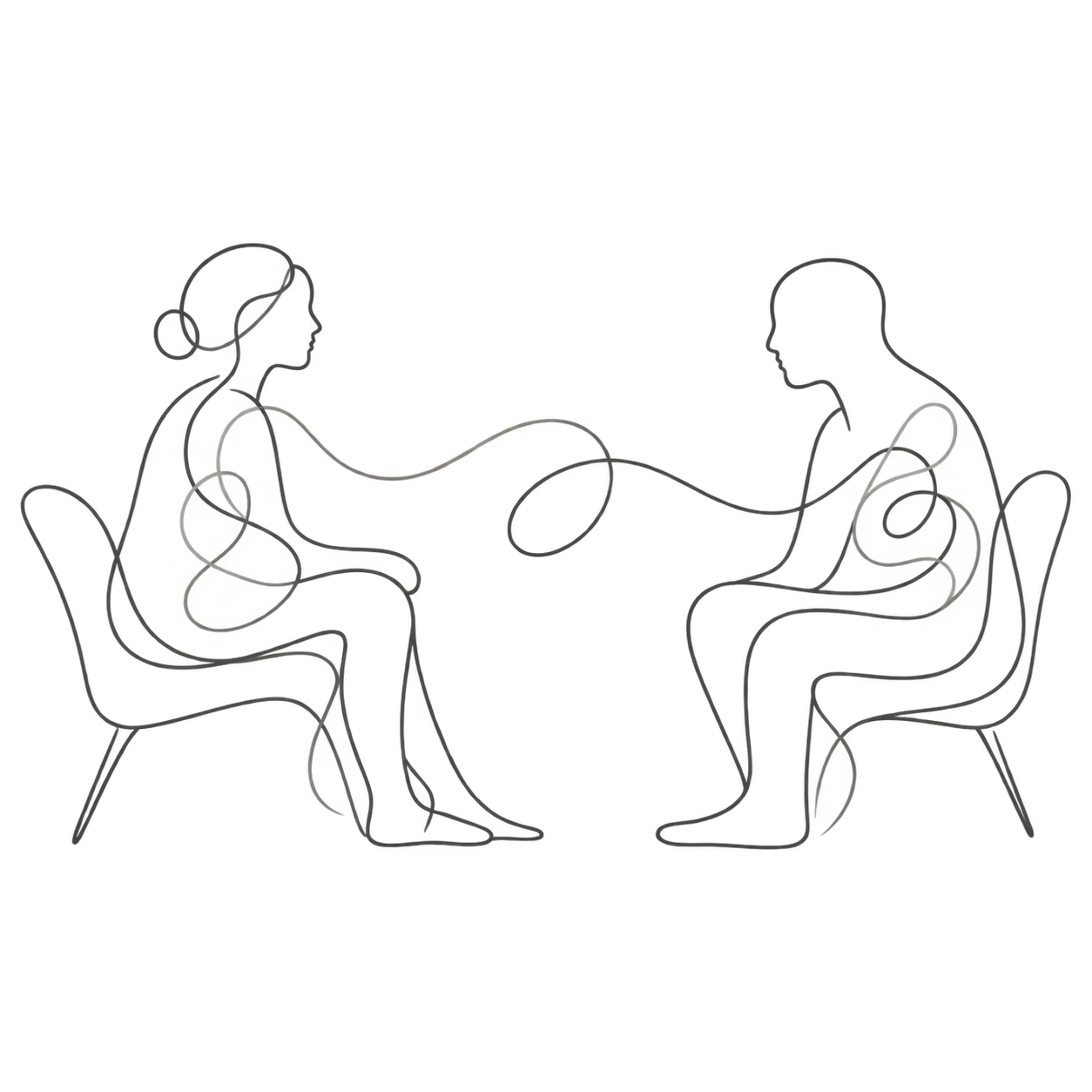
Gestalt psychotherapy recognises that your lived experiences are held not only in your thoughts, but also in your body, emotions and nervous systems, and this shapes how you are in relationship with yourself and with others.
We pay attention to what is happening in the present moment - including bodily sensations, emotional responses, patterns of relating - as we get to know the ways you have learned to adapt in order to cope, survive, or belong.
Rather than trying to “fix” you, our therapeutic relationship becomes a collaborative process of curiosity, awareness, connection, and exploration.
Meaningful change comes when you can deepen awareness of your unfolding experience, with me and within your relationships. This new awareness offers you new ways of being, relating, and responding. Each new experience in turn, once integrated body and mind, supports new possibilities.
You do not need any experience with body-based or somatic work before beginning. We simply start where you are.
You may come to therapy because….
You feel emotionally exhausted, overwhelmed, or burned out.
Anxiety or stress is affecting your daily life or relationships.
You are moving through periods of transition, including burnout, grief, perimenopause, or significant life change.
You feel disconnected from yourself or uncertain about who you are becoming.
Patterns in relationships continue to repeat.
You are carrying emotions or experiences that feel difficult to process alone.
Something in your life no longer fits, but you cannot yet see clearly what comes next.
How we work together
Our work together may include exploring:
emotions and emotional patterns
nervous system responses
bodily sensations and awareness
grief, anxiety, or overwhelm
relational dynamics and attachment patterns
identity and meaning
the ways you have learned to protect or adapt
Our relationship is an important part of the process.
As a Gestalt therapist I meet you, not as an expert but, as someone who brings my embodied awareness to our work.
We can work together short-term (8-12 sessions) or longer-term. Sessions move at a pace that honours where you are now.

Frequently Asked Questions
Beginning therapy can bring up many questions. Here are some of the things people commonly wonder before starting.
-
I am an accredited psychotherapist with IAHIP and registered with the Irish Council for Psychotherapy (ICP). Depending on your health insurance plan, you may be able to claim back part of the cost of psychotherapy sessions. Please check your individual policy with your insurer.
-
Yes. Research suggests that Gestalt therapy can be an effective approach for supporting anxiety, depression, emotional regulation, relationship difficulties, self-awareness, and overall psychological wellbeing. Several reviews and meta-analyses have found Gestalt therapy to be comparable in effectiveness to other established therapeutic approaches.
At the same time, Gestalt therapy can be more difficult to research in the same way as highly structured approaches such as CBT. CBT often follows standardised protocols that are easier to measure through quantitative studies and symptom-based outcomes. Gestalt therapy is more relational, experiential, and tailored to the uniqueness of each person, relationship, and therapeutic encounter. Rather than applying the same intervention in the same way for every client, the work responds to the lived experience, context, and present-moment process that emerges within therapy itself.
Because of this, research into Gestalt therapy often includes more qualitative and process-oriented studies exploring people’s lived experience of change, relational healing, embodiment, self-awareness, and long-term integration. Recent systematic reviews suggest that Gestalt therapy can support meaningful and sustained improvements in emotional wellbeing, self-development, interpersonal functioning, and quality of life.
Many people are drawn to Gestalt therapy not only for symptom relief, but because it offers a deeper embodied awareness of how they live, relate, protect themselves, create meaning, and make contact with the world around them.
-
CBT (Cognitive Behavioural Therapy) and Gestalt therapy are both well-established approaches, but they work in different ways.
CBT is generally more structured and focused on identifying and changing unhelpful thoughts and behaviours. Because it is often short-term, measurable, and supported by a large body of research, it is commonly recommended by GPs and public health systems such as the HSE.
Gestalt therapy takes a more relational, embodied, and exploratory approach. Rather than focusing primarily on changing thoughts, it pays attention to your present-moment experience - including emotions, bodily sensations, nervous system responses, relationship dynamics, and the ways you have learned to adapt within your life and relationships.
Gestalt therapy also recognises that we are not separate from the environments and relationships we exist within. Therapy may include exploring questions of meaning, identity, belonging, uncertainty, freedom, and how you want to live and relate more fully in your life.
Neither approach is inherently “better.” Different people are drawn to different ways of working depending on what they need, where they are in life, and the kind of support they are seeking.
-
Relational Gestalt therapy is a embodied and experiential approach that pays attention not only to thoughts and emotions, but also to the body, nervous system, relationships, and present-moment experiences as they unfold in the therapeutic relationship.
Gestalt therapy recognises that we are continually shaped by our relationships, environments, histories, cultures, and the wider contexts we live within. Difficulties are not understood simply as individual problems to fix, but as experiences that emerge within the complexity of being human and being in relationship with the world around us.
Gestalt therapy involves developing greater awareness of how you make contact with yourself, others, and your life — including the ways you may move toward connection, protect yourself, adapt, withdraw, or repeat familiar patterns.
Over time, this awareness can create the possibility for new choices, new ways of relating, and a more embodied sense of connection, meaning, and aliveness.
-
People come to therapy for many different reasons. You do not need to be in crisis or have everything clearly understood before reaching out.
You may be feeling emotionally overwhelmed, anxious, burned out, disconnected from yourself, stuck in recurring patterns, navigating grief or change, or sensing that something in your life no longer feels sustainable or aligned.
Therapy can offer a space to slow down and become more aware of what is happening within you and around you — emotionally, physically, relationally, and existentially. Sometimes what we are struggling with does not exist only “inside” us, but within the ways we have learned to adapt to relationships, environments, expectations, and life experiences over time.
Gestalt therapy is grounded in the belief that greater awareness creates the possibility for greater choice. Often people begin therapy not because something is “wrong” with them, but because they are longing for a more connected, authentic, and meaningful way of being in their lives and relationships.
-
Yes - many people choose to engage in both therapy and coaching simultaneously, particularly during periods of transition, change, burnout, or personal growth.
Therapy and coaching can complement one another well when the purpose and boundaries of each space are clear. Therapy may support deeper emotional healing, relational patterns, grief, anxiety, or the impact of past experiences, while coaching may focus more on direction, identity, leadership, or navigating change in everyday life.
Both relational coaching and Gestalt therapy share an understanding that we are shaped through relationship, context, and lived experience rather than existing as isolated individuals. In both spaces, greater awareness can support new possibilities for choice, connection, and action.
What matters most is that the work feels supportive and appropriately paced for where you are right now.
-
Traditional talk therapy often focuses primarily on thoughts, reflection, and verbal understanding. Embodied relational therapy, also referred to as somatic or body-oriented therapy, includes awareness of the body (including the nervous system) as part of the therapeutic process.
This may involve noticing bodily sensations, breath, tension, emotional responses, impulses, patterns of activation or withdrawal, and how experience unfolds moment by moment within the therapeutic relationship itself.
Embodied relational therapy recognises that many of our experiences are lived physically as well as emotionally and cognitively. As such, the body is understood not simply as something we carry around, but as an important source of memory, protection, adaptation, awareness, and meaning.
As awareness deepens, people often begin to recognise familiar ways of responding to themselves, others, and the world around them - and gradually discover that new ways of relating, responding, and making contact become possible not only intellectually, but as an embodied lived experience.
-
My fee is €85 p/50 minute session.